

TECHNOLOGY SPOTLIGHT
Entra Private Access: control access by application
Remote access often begins with a network connection. Identity-based application access offers a more focused way to decide who can reach a private resource.
Make the access boundary explicit
A user may need one internal application rather than broad access to the network around it. Defining that requirement is useful when introducing a new service and when simplifying an established remote-access design.
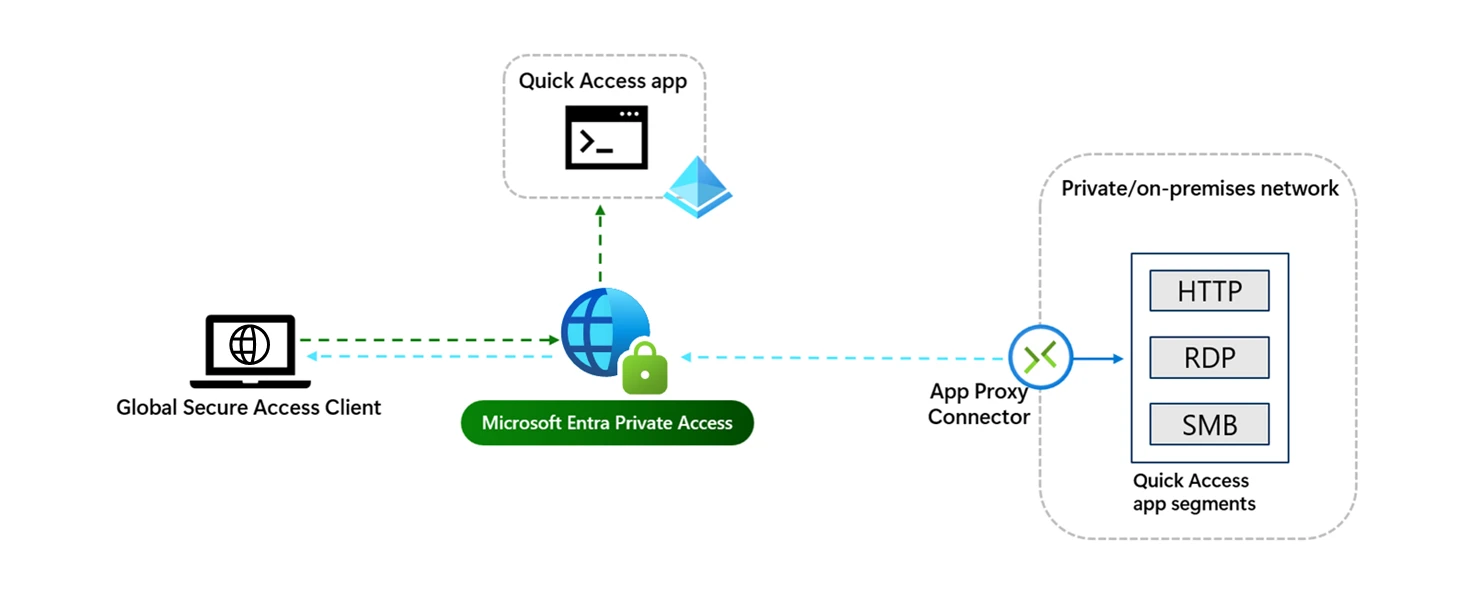
Microsoft Entra Private Access brings identity-based controls to access for private resources. Microsoft’s guidance describes granular application access alongside controls such as Conditional Access.
Map the application before changing the route
Identify the users, application dependencies, protocols and supported client platforms. Plan connectors, connectivity and any name-resolution requirements against the intended architecture.
A narrower access model does not automatically make the application secure. Device posture, identity protection, application permissions and operational monitoring remain part of the design.
Test the exception paths
Include privileged tasks, third-party users and remote locations in a pilot. Confirm what happens when a connector, identity dependency or client connection is unavailable and how support will diagnose the issue.
Fortem can scope the licensing and delivery requirements for private application access. Bring the applications, user groups and current or proposed access model so the quotation covers a defined deployment.